Wishlist

Quick answer: Make pots, pans and utensils easy to reach by sorting by use, reducing duplicates, and assigning purpose-built zones—vertical for skillets, nested for saucepans, lids stored on doors, and utensils separated by task.
Organize pots, pans and kitchen utensils efficiently by deciding what you actually use, grouping like items, and choosing storage that matches the shape and frequency of use for each piece. The rest of this guide walks through a practical order to do that in one afternoon, with options for drawers, cabinets and small kitchens.
Start with a quick purge and decision rules
Empty the cabinets and drawers that hold cookware. As you handle each item, ask: Have I used this in the last year? Is it damaged or redundant? Does it fit my current stovetop or oven? Keep one good version of each function (stockpot, saucepan, skillet, baking sheet, roasting pan) and donate or recycle extras.
Keep specialty pieces only if you use them regularly (wok, paella pan, pressure cooker). If you cook for different household sizes, keep one family-sized and one small pan rather than three medium ones.
Group by function and frequency of use
Put items you use daily within easy reach. Seldom-used pieces go higher or deeper. Typical functional groups:
- Everyday skillets and sauté pans
- Saucepans and small pots
- Large stockpots and roasting pans
- Baking sheets and oven trays
- Mixing bowls and strainers
- Utensils: stirring, flipping, measuring, prepping
Label mentally or with removable stickers when you put things back—this helps household members return items to the right place.
Choose storage methods that fit each shape
Different cookware shapes need different solutions. Match the method to the piece:
- Skillets and frying pans: store vertically in a rack or use a slotted divider so you can pull one without shifting a stack.
- Saucepans and stockpots: nest them by size with felt pads or silicone protectors to avoid scratches.
- Lids: use a dedicated lid organizer, mounted on a cabinet door or inside the cabinet, or a horizontal rack if counter space allows.
- Baking sheets: store upright on their long edge in a baking sheet organizer or a narrow vertical divider at the side of a cabinet.
- Utensils: separate prep tools (knives, peelers) from cooking tools (spatulas, spoons) and store knives in a block or magnetic strip, cooking tools in a jar by the stove or a shallow drawer with a tray.
Deep drawers are ideal for pots and pans because they give full access and support nesting. If you only have cabinets, prioritize pull-out shelves or sliding organizers so heavy pans aren’t lifted from the back of a low cabinet.
Install a few targeted organizers (no overhaul needed)
Small additions make a big difference. Consider:
- Vertical pan organizer for skillets
- Cabinet-door lid rack or slim lid divider
- Pull-out shelf or pantry slide for heavy stockpots
- Segmented utensil drawer tray for spoons, whisks and tongs
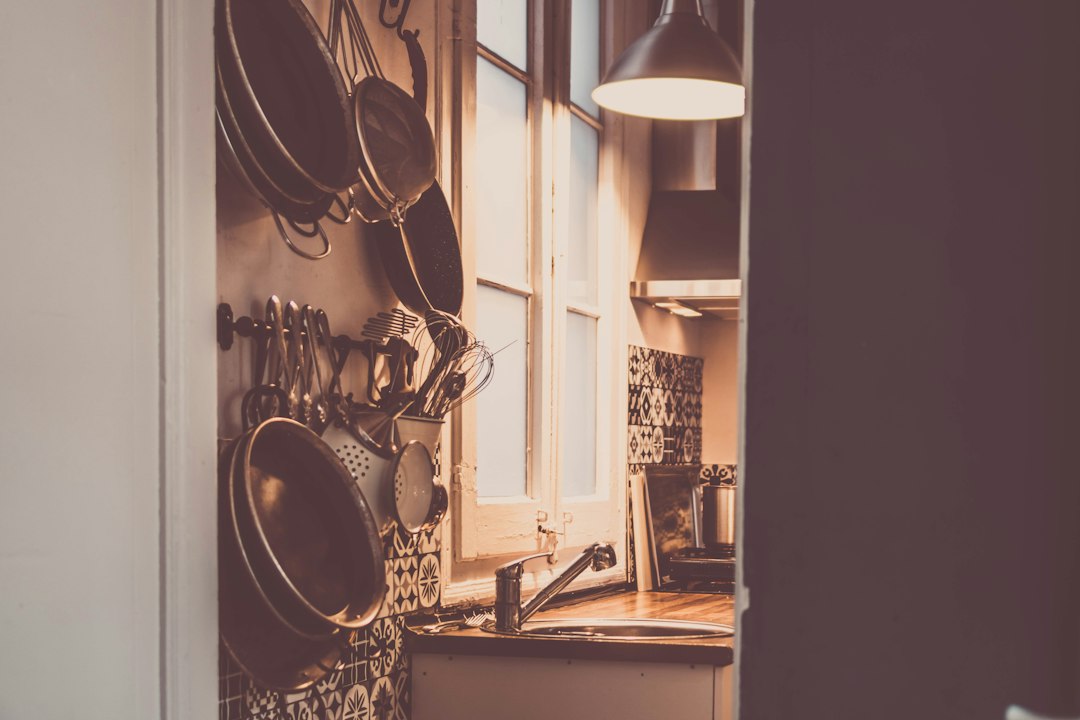
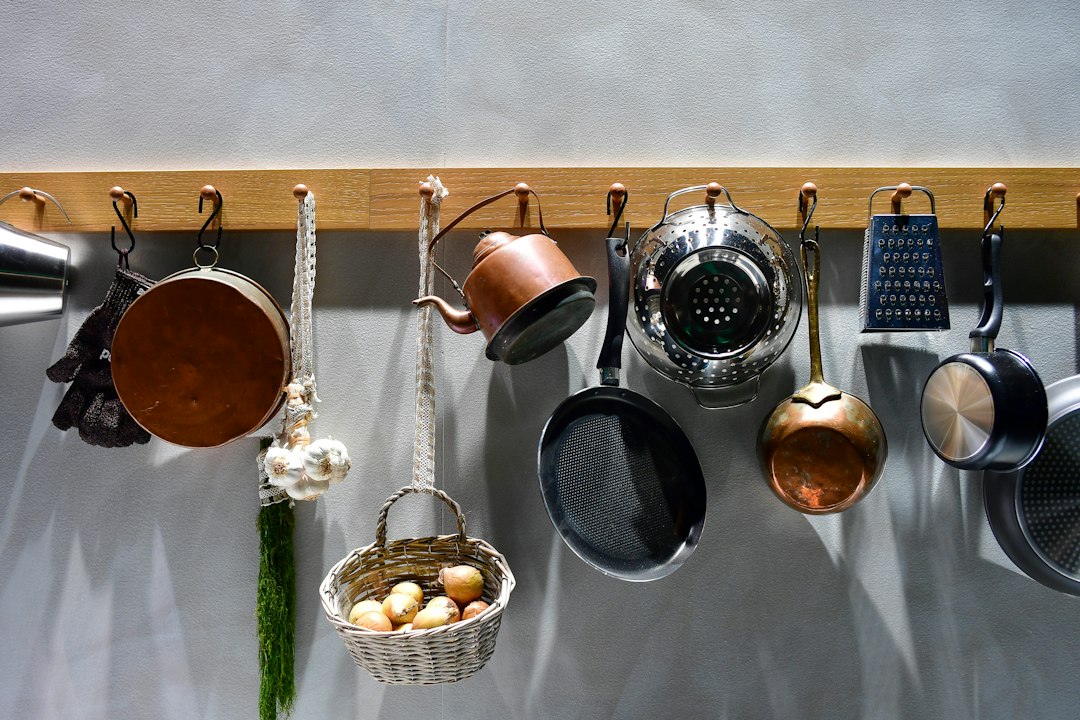
- Hanging rail or pegboard for long-handled tools
These items are inexpensive and can be fitted in most kitchens without contracting work.
Place items by cooking workflow
Think of your typical meal from stove to table and place items along that path:
- Near the stove: skillets, spatulas, tongs, frequently used lids
- Near the sink/dishwasher: pots you wash often, lids and strainers
- Near the oven: baking sheets, roasting pan, oven mitts
Putting things where you use them reduces friction—reach for the pan, not for a ladder or three other items to get it.
Utensils: use trays, jars and vertical slots strategically
For utensils: reserve a countertop jar for 2–4 tools you use every day (spatula, wooden spoon, ladle, whisk). Store bulk utensils in a shallow drawer with a segmented tray so similar tools are grouped. For long implements like rolling pins or skimming spoons, a narrow drawer or wall-mounted rail keeps them flat and accessible.
One product pick when you need a full set
If you’re replacing cookware and want a simple, cohesive set that stores well and reduces clutter, consider a well-rated cookware set that nests and has matching lids—this reduces mismatched sizes and lid searches.
This pots and pans set is a practical fit for cooks who want durable nonstick pieces that nest and cover basic functions; it’s useful if you’re consolidating multiple mismatched sets into one manageable collection.
Troubleshooting common problems
Problem: Stacks fall over when you pull one pan. Fix: switch to vertical dividers or add a non-slip liner at the base; remove the most awkward item and store it separately.
Problem: Lids take over a shelf. Fix: use cabinet-door storage or a slim lid rack stored vertically so lids don’t block other items.
Problem: Utensil clutter on the counter. Fix: limit the jar to 2–4 items and move the rest to a labeled drawer tray; rotate seasonal tools to another cabinet.
Adaptations for small kitchens and renters
- Use tension rods inside a cabinet to create vertical dividers—no drilling required.
- Magnetic knife strips free up drawer space and can be stuck to a tile or drywall with removable adhesive designed for hanging tools.
- Over-the-door racks for lids or utensils are renter-friendly and reversible.
Maintenance so your system lasts
Every three months, quickly reassess: remove single-use items accumulating in your drawers, re-nest pots that slid apart, and wipe organizer surfaces. Replacing a damaged silicone spatula or a scratched pan when you notice it prevents slow slide toward disorder.
- Empty and sort every pot, pan and utensil by use and frequency
- Donate or recycle rarely used duplicates
- Assign zones: stove, sink, oven—place tools where you use them
- Add vertical dividers for skillets and a lid rack for lids
- Use a segmented drawer tray for utensils and a countertop jar for daily tools
- Reassess and tidy the system every 3 months
Efficient cookware organization is about matching storage to shape and habit: keep everyday pans accessible, nest and protect similar pieces, and give lids and utensils dedicated homes. Small organizers and a single cohesive cookware set can simplify both storage and cooking.
How should I store cast iron skillets?
Keep cast iron dry and slightly oiled; store them stacked with paper towels between pans to protect seasoning, or hang them on a sturdy wall rack if space allows.
Are pot lid organizers worth it?
Yes—lids are awkward and take disproportionate space; a door-mounted or vertical lid organizer clears shelf space and reduces searching.
Can I put cookware in a drawer?
Deep drawers work very well for pots and pans—nesting saves space and full access prevents heavy lifting. Add a non-slip liner and protectors between pieces.
How many spatulas and spoons should I keep?
Keep 2–4 everyday tools within arm’s reach and store extras by type in a drawer; this balances readiness with reduced clutter.
What’s the best way to store baking sheets?
Store baking sheets upright on their long edge in a narrow vertical organizer or at the side of a cabinet so they’re easy to slide in and out.